Showing posts with label History. Show all posts

Tuesday, 25 May 2021

Poison as a political weapon

     Poison has been for a long time present in our societies. We can trace it back to the Egyptians and Romans. It´s being used like an easy and anonymous way to commit a murder. But why do I say it's a political weapon? Well it's being long used on kings,princes,spies, mafia members, etc and nowadays between political rivals. There are many common poisons such as arsenic that are easy to obtain and a lot of times are difficult to detect at the autopsy. That's the reason why poison is such a dangerous and effective weapon.
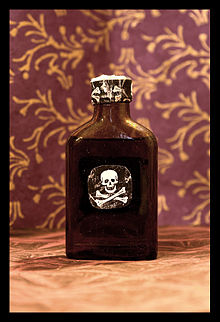


    What is a poison exactly and what´is the etymology ? Poisons are compounds that when they enter in contact with our body ( injected,inhaled,ingested,absorbed) cause that they don´t work normally ( what an eufemism to say that they kill you) , cause disruption commonly through chemicals. Although not all poisons kill you immediately, some of them need to be used in various doses.


     The word poison came from the Old French “ poison” , it is spelled the same but pronounced differently.It  first referred to drink, specially a medical drink, then to a  magic potion and later on a poisonous drink. 


    It's difficult to say when  poison was first used .  Evidence shows us that poison usage goes back to the earliest stages of humankind " showing that early humans had discovered poisons of varying potency and apllied to their weapons"  .


    To give you an idea, in ancient Rome, a person was designated as a “praegustator”, which means that they taste the monarch's food in order to prove if it's safe. Often a slave was nominated for this job.


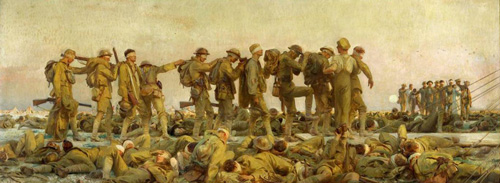
    Sadly a very common known poison is “ mustard gas” , the one used in the concentration camps at the WW2 , in the gas chambers,  to kill the prisoners. Although the use of this gas dates back from WW1, when Germans used it on British soldiers. Even so the gas attacks were then used by almost all the armies. Firstly this gas, chlorine, was not as lethal as the one used at WW2. Mustard gas causes skin redness and blisters and the skin eventually peels off. Inhaling the vapors of this gas can also cause destruction of lung tissue .


    If we are talking about poison we can't avoid talking about the Sovietic Union and the Kremlin. They have been using poison as a political weapon for a very long time. The KGB instaurated in 1921 the Kamera also called Laboratory 1 or Laboratory 12. There by orders of  Stalin , a KGB scientist  experimented with poison . These experiments were made on humans : gulags´ prisoners , soviet spies or even militaries. No one was safe . The leader of these awful tests was Grigori Mairanovsky, also referred to as Dr. Death ( for obvious reasons) . He used ricin,mustard gas,curare,cyanide and digitoxin. He developed a deadly poison , which he named C2 or K2, who caused the almost immediate death of the victim. 


    With the passage of time soviet scientists innovated with new ways of poisoning people to look like natural causes and even in the daylight .They developed weapons that emitted clouds of cyanide and made death look like due to natural causes such as a heart attack. The Ukranian political writer Lev Rebet and the leader of Ukranian nationalist Stepan Bandera were unfortunately victims of these kind of murder. As well as Georgi Markov, the victim of the umbrella assassin” a bulgarian dissident who lived in London . He was waiting at the bus stop when all of the sudden felt a sharp twinge on his side.  He didn't see an insect but a man picking up an umbrella. Afterwards he became very ill and died 4 days later. The cause of death: ricin poisoning. These are only a few examples on how the KGB used poison as their main political weapon to eliminate people who were opposed to their political agenda .

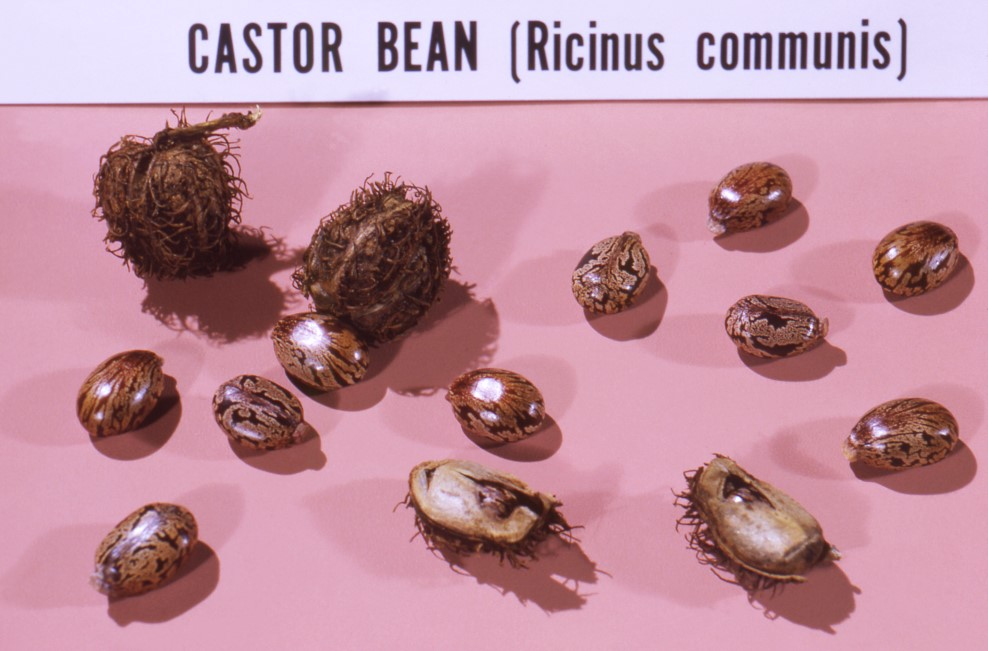

Polonium and ricin are two common poisons used by the KGB.


    This dark era of the Sovietic Union even if to the eyes of the world community has ended , this is not the termination of the poison use. Famous cases like the poisoning of  ex-FSB (Federal Security Service)  spy Litivinenko, who started collaborating with Britain. He became a bold dissident of Putin's regime .   Eventually he became ill after meeting two ancient KGB officers at the Millenium hotel in London. Later on he finds out he was poisoned with polonium. His tragic death circled the globe.   Other two famous cases with “Novichok” a toxic substance created by the KGB are the  one of the  ex-KGB agent Sergei Skripal and his daughter in Great Britain and the Navalny´s one , the russian opposition leader, in Russia . In both cases Russia denied to have any concern about this crimes.


    Nevertheless the Kremlin is not the only government to make use of poisons. The infamous North Korea  regime used to kill Kim-Jong un's brother . He was attacked by two women at Malaysia airport who sprayed with a VX-nerve agent. The reason? He escaped from North Korea and was a regime critic. 

Furthermore Israel also made use of poison in Khaled Mashaal´s attemp of murder. He is a high rank member of Hamas, the Israel opposition . In 1997 two israelis agent try to murder him by injecting “ levonenfantyl” into his left ear. Nevertheless he survived thanks to the antidote ironically given by Israel's government.


    Poisons are only an example on how weapons are being developed and used for political reasons. Progress and new technologies are great of course , but the question is how we are going to use it. To good or bad purposes? 


Tuesday, 17 November 2020

The history of electronic music

Electronic music, what is it ? The common thought is that it is the “ party music” you hear at the clubs or for the people who don't like it, it's just noise. My aim with this post is not changing your opinion if you don't like this music gene, which is my favourite, but instead I want to show you the large history behind it. And that is everywhere , at commercials, movies, stores, even pop music or hip hop. The history  goes up to the beginning of the 20th century, yes that´s crazy.


The dictionary definition for electronic music is : Electronic music is music that employs electronic musical instruments, digital instruments and circuitry-based music technology. It´s a very vast definition but basically electronic music borned as a new way of making music, using the new technology that was being developed and finding new sounds to use.


The genesis of the music recording was thanks to Thomas Edison and Emile Berliner with the invention of the phonograph . This revolutionary invention was the proof music could be captured and be reproduced in the future.


 Electronic instruments:


There were many “ proto” instruments of electronic ones. For instance the most known are the telharmonium and the theremin.

Thaddeus Cahill, a lawyer, developed the telharmonium in 1867, and this one is considered the first electronic instrument . It was born like an idea of Thaddeus of making money with the creation of the telephone.  This electric organ basically used rotating electromagnetic generators (and thus was a predecessor of the Hammond organ) to produce electric impulses that were converted into sound by telephone receivers.   The telharmonium made use of the telephone networks and transmitted music to restaurants, houses , hotels. The subscriber called the central, asked for the telharmonium and chose the song they wanted to hear. However this creation led to various struggles because it interfered with  the telephone service in the area.

The theremin was created in the early 1930s by the russian Leon Theremin, literally you can play this instrument without touching it , i t works with “electromagnetic fields that create sounds at different pitches when the musician moves her hands around the theremin.”


Early history:


Another influence was dadaism who was not only present is visual art but had a crossover with music . Dadaism wanted to break the esthetic canons of art, to put the chaos over the order, basically it wanted to break with all it was established.


The emancipation of noise also played an important role. What is music? What can be music? These questions led to reconsider the idea of music and what sounds can compose it .


Musique concrète (Paris): 


This movement, more precisely it was a study carried by Pierre Schaeefer originary  from Strasbourg. He wanted to experiment and find new ways of sampling sounds and put them together.  He founded the “ Groupe de recherche de musique concrète”(Concrete music research group) in the French Radio Institution  in 1951. Also he collaborated with the percussionist composer on many different musical compositions.They were making music with existing sounds such as train noise for example. Pierre Shaefer invented sampling, which is the reuse of an existing  sound in a new record, this is very popular in all music genres like hip hop and of course electronic music.


Elektronische Musik( Cologne,Germany) :


All the way around to Cologne in Germany a new movement of electronic music is borned, and it's one with a different perspective. Elektronische Musik was started by a team who wasn´t really integrated by musicologists but by  speech researchers, radar technicians, etc .They saw science as the future and how they could integrate technology in music. Germans were very intrigued and impressed with the american invention the vocoder , which was a speech analysis machine that you could also use to alter speech and to analyze the components . Serialism was the base of this pursuit to electronic music creation , they wanted pure and objective music.  Some major representatives are Stockhausen, Werner Meyer-Eppler, Hebert Eimert .


Music for Magnetic Tape (USA):


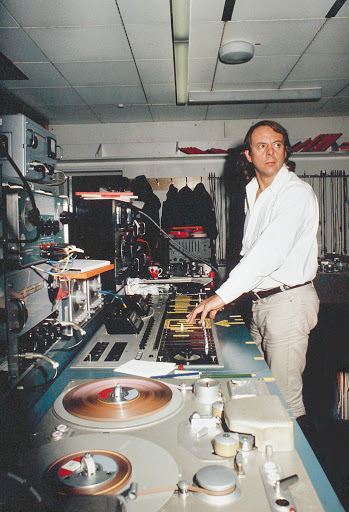
At the end of the Second World War USA was intrigued by the advanced  audio technology used by germans, so they decided to send militaries to find  more about it. It was John T. Mullin who was sent to research them. What the germans used to  transmit Hitler speeches were tape records, who at the time were unknown and a secret for other countries. These techniques enable composer to record any sound whatever on tape and then manipulate the tape to achieve desired effects. Sounds can be superimposed upon each other ( mixed) , altered in timbre by means of filters , or reverberated.


 From The 70's : 


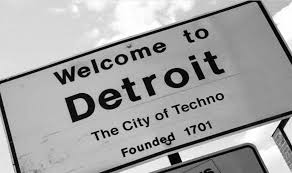
In those years a lot of artists mostly in Europe started to exploit the new sounds that we´re able to do with synthesizers. Undoubtedly Kraftwerk, a german electro-pop band, is one of the electronic music pillars . They liked to experiment a lot with their music, with synthesizers. At the beginning their tracks were more melodic but with albums like “ Man Machine” we can see their approach with techno. This band was integrated  by  Florian Schneider, Ralf Hutter,Wolfgang Flur and Karl Bartos , and until today is a big influence in the music industry.  It's unavoidable to talk about disco music , the name comes from “ discotheque” in french which means library of phonograph records. At this time was  when the terms “dj” or “ disc jockey” began to be used.  It´s a mix of funk, salsa,soul and pop.  Disco was very popular in the gay , african american and hispanic community. This new genre of music reached his edge at the middle of the 70´s ,“ Love Train” was the first disco song to reach the first place at the Billboard Hot 100. This era was characterized by colorful and shining clothes, dancing at the clubs dancefloors, free love and well drugs. Disco leads to the creation of two major genres , house and techno. The place of birth of techno is Detroit, where young people sick and tired of economic problems and the difficulties went to abandoned factories and started doing music, those parties  were crazy. The pioneers of techno are Juan Atkins, Derrick May and Kevin Sauderson. House was borned in Chicago and it comes from disco music. The club “ The Warehouse” where Frankie Knuckles was the dj resident , is where house music originated. This music genre was characterized by the combination of sounds, remixes, adding drums and synths. House spread all over the world and also lead to new subgenres such as deep house or acid house.


Nowadays:


Nowadays there are a lot of electronic music genres that it is impossible to name them all but the famous ones are: house,minimal,techno,drum and bass,progressive, acid,experimental,edm. Thanks to computer programs like Ableton, anyone is capable of creating their own tracks.


Thanks to the advance of technology and the growing electronic music scene all over the world we can enjoy all kinds of music and it keeps developing it.  Raves and festivals take place all over the world ( even if sadly  due to the actual crisis we cannot enjoy them) 


Personally I love Soundcloud where I can find tracks  and sets from a lot of different artists, and  a big part of them are independent ones or not streaming ones  . Also if you like listening to sets of this music a good alternative is the youtube channel “ Cercle”. The videos are stunning, the views, the crowds, the artists. And if you are into lo-fi music , minimal  and kind of experimental music you should check the channel EELF. It's awesome because they take videos from the 70's,80`s,90`s from movies, parties, schools, movies everything and they put them with the music. And the best of all is they premiere videos almost everyday.


Electronic music is much more than raves , and it's not only about partying or “ taking drugs”. Those are big misconceptions. Electronic music is freedom to express you through music, it's love and appreciation for artist, it´s music at his pure state, it's getting out of this world, it's dancing all night and listing track of time because you´re having the best time of your life  , it's PLUR ( Peace, Love, Unity and Respect).


Tuesday, 8 September 2020

Ashoka and buddhism

History makes us, we are our history. When you learn about world history you understand a lot of things, a new world is opened to you.  We are going to see how one of the most bloodthirsty  Mauryans emperors from India converted himself into a loyal follower of Buddhism and thanks to it he conquered through peace and respect. 


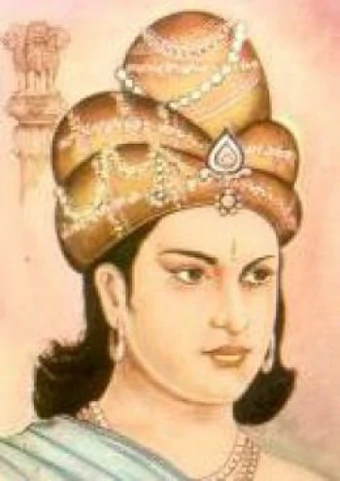
Ashoka was born in 304 b.c in India , his grandfather Chandragupta who built the Mauryan empire with the help of his tutor and advisor Chanakya. His successor was Bindusara , Ashoka´s father. Bindusara had a lot of children and Ashoka wasn´t one of his favourites, he disliked him because of his appearance and his strange skin due to a disease. Normally the next emperor was going to be his brother Sushima but Ashoka took his place after his father's death and burned him alive.For instance, to succeed to the throne he killed 99 of his brothers , sparing only one.  He ruled almost all Indian subcontinent from 268 B.C.E  to  234 B.C.E through a non violence edict. But he wasn't always the  pacifist emperator we know nowadays, as you could notice. Initially he was very cruel and took part in massive killings according to the Ashokavadana (sanskrit text that narrates  Ashoka's life and  reign ). For example is told he was very interested in tortures techniques and even built the “ Ashoka hell” a prison that seemed very elegant and beautiful from the exterior but inside was a torture chamber.He converted to Buddhism after witnessing  massive deaths (100,000 people), he deported around of 150,000 and leaving thousands die of famine and diseases. in their conquest of the Kalinga´s state.  It's not very clear how he got in touch with buddhism, it's possible that he had already heard about it before Kalinga or maybe after his war he learnt more about Buddha´s  learnings and combined them with other religions beliefs that in that time in India embraced peace, respect and spirituality.   At this time buddhism was a minor philosophical religion and thanks to him the buddhism was expanded through India and the Occident. 


He implemented a tolerance and respect policy,he helped the diffusion of buddhism teachings. He reigned with “ dharma” wich in hinduism means “ the purpose of your life” but in his context was also understood as  to be the energetic practice of the sociomoral virtues of honesty, truthfulness, compassion, mercifulness, benevolence, nonviolence, considerate behaviour toward all. He even  became vegetarian because of the “noninjury to animals” buddhism belief. His aim was to spread “nirvana” which can be translated as “ a non pain state” , and happiness.


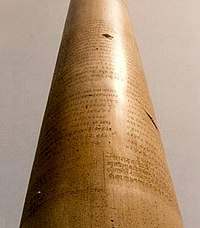
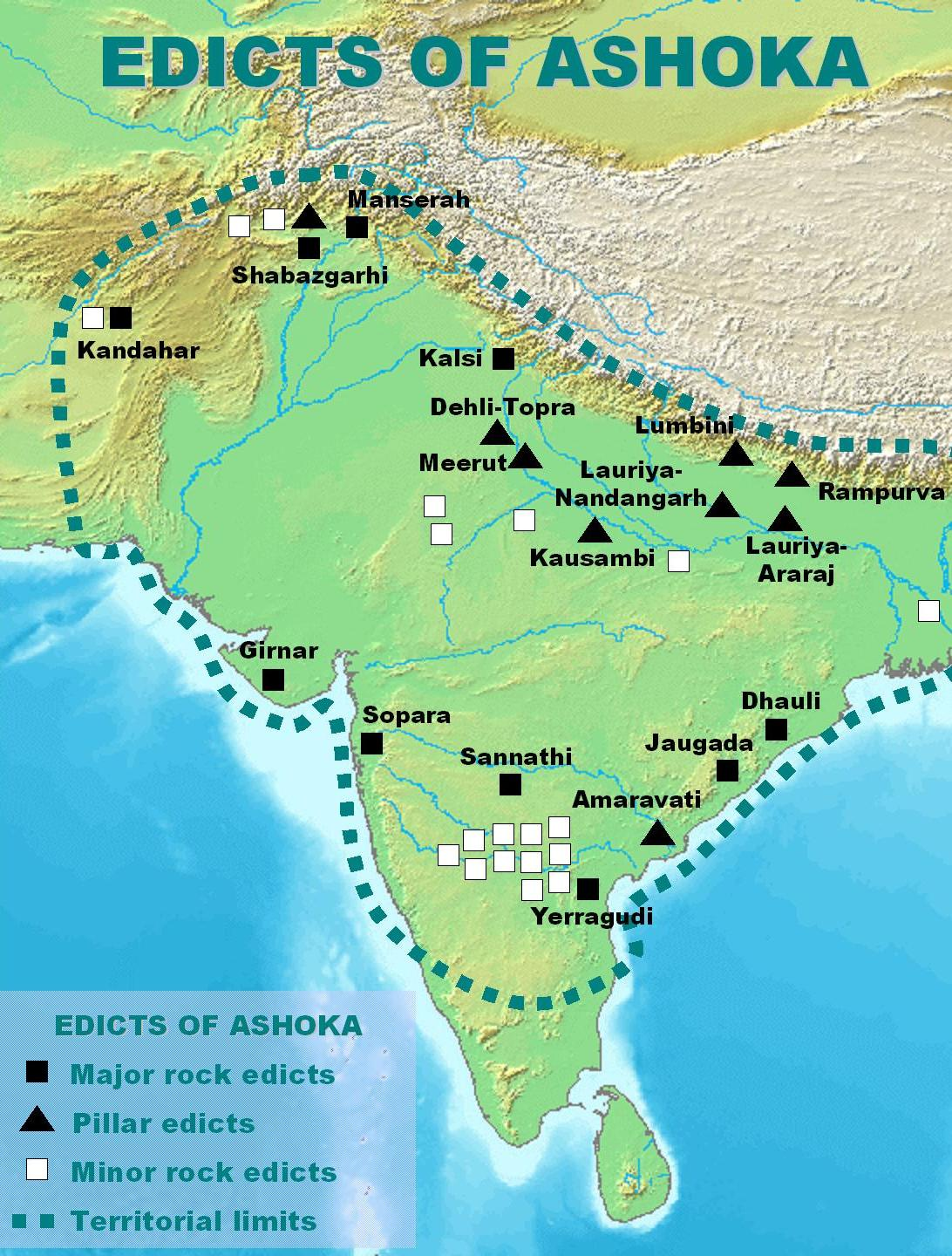
How did he exactly manage to spread buddhism? First he went to numerous pelerinages, learnt more about “ dharma”, sent buddhist  monks on missions all around Indi, Asia and even Europe.Ashoka ordered the constructions of enormous stone pillars ( between 15 and 20 km) and slab where it will be witten dits. These ones showed the emperor a new outlook of life and spread the message of peace, respect and tolerance.They were not carved in Sanskrit—the official state language—but in local dialects, so that the messages could be widely understood. For example, an edict near modern-day Kandahar in Afghanistan, an area that had been under Alexander the Great’s control for a period of time, is written in Greek and Aramaic.


Quoting him :


All men are my children. As for my own children I desire that they may be provided with all the welfare and happiness of this world and of the next, so do I desire for all men as well.


Of all Ashoka's stone works, probably the most famous one is the Lion Capital at Sarnath, who later became the nation's symbol at Indian independence.


 After his conversion he performed social welfare activities such as the construction of medical treatments , he constructed special botanic gardens, roads were built, veterinary establishments were constructed.


Even if probably Ashoka's history is too good to be true and maybe some details are not that reliable( for example he continued to use military forces after his conversion) this emperor is a great example of good values such as tolerance, caring for the common good and how finding internal peace and follow the path of happiness can change us.

Wednesday, 15 July 2020

Freemasonry and Illuminatis

I think that we´ve all heard about the famous conspiracy theories about the Illuminati and Freemasonry, but we are not sure what's the difference. I'm going to tell you first what are the origins of these two groups and their history . Then , what are the differences between them .And finally my opinion about them.

 The Freemasonry is the world's largest worldwide secret society. The questions of when, how, why and where Freemasonry originated are still the subject of intense speculation.There is a legend where they said that the first mason mentioned in history is Hiram Abif the architect of the Temple of Solomon in Jerusalem . Other theories say that the Freemasonry existed a long time ago, that characters from the Bible like Noe, the architects mentioned or Moíses were masons.

 They attribute to the masons the construction of the pyramids, that they were part of the humanists of the Renaissance .The general hypothesis is that they descend directly or indirectly from the organisation of operative stonemasons who built the great cathedrals and castles of the middle ages.

 There are 3 degrees in Freemasonry Apprentice, Journeyman or fellow (now called Fellowcraft), and Master Mason. The first Mason Lodge was built in England, in 1717 . It was the Grand Lodge and is located in England.The Freemasonry is divides in two currents : Regular Anglo-Saxon Freemasonry ( British Isles, United States,a big part of Europe included Spain, the american continent) and Regular Continental Freemasonry ( France,Francophone Africa,and part of Europe).
The regular Anglo-Saxon Freemasonry is the one with the more “ strict rules”, for example it's prohibited to discuss about politics and religion, women are not allowed ans you must belief in a Supreme Being.

 The rules accepted by the two orders are : That it must have a legitimacy of origin; that is, that its constitution has been sponsored by some other regular Masonic organization. In this sense, the initial regularity is generally considered to emanate from the ancient Grand Lodge of London and Westminster. Respect for the values and fundamental principles established in the founding documents, in particular the so-called Anderson Constitutions, published in 1723.
We could say that each Grand Lodge is independent, even if they respect some basic rules they can implement their own.
Usually there is a Grand Lodge that supervises the lodges in their state or country but there isn't a Worldwide Lodge that supervises everyone. Finally, lodges that don't include the criteria of either of the two main currents are usually called wild, although they prefer to refer to themselves as under the celestial vault.

 The oppositors of the Freemasonry all along the History were the Catholic church, the Islam religion, dictatorships like the fascim, the nazis,etc. That's because they saw Freemasonry as a dangerous society related to esotericism and that wanted the destruction of religion, the family and the State.

 Currently being part of Freemasonry is easier, or not that hard to enter. If you want to be a Mason, you can petition a local lodge for membership. You'll need to demonstrate good character and belief in some sort of Supreme Being. Then the members of the Lodge will vote to see if they accept you. But almost all the lodges are exclusives for men.
The etymology of “ Illuminati” refers to the illuminated mens, the ones who know the truth, that are enlighted with this wisdom . Various groups claimed to be illuminatis, there is not only a group. There are the Alumbrados( 16th century) in Spain,the Rosicrucians that remained secret the first 100 years of their creation. However on this post we are going to focus on the group from Bavaria, the “ famous” ones.


The Secret Society of the illuminatis started with 5 men on may 1 , 1776, yes in their first meeting there were 5 men signing a pact in the woods. It all started with the bavarian professor Adam Weishaupt. His family was jewish converted to christianism and he was very devoted. Despite this he thought that the power from the monarchy and the church didn't let the men be free. At this time the Freemasonry was expanding all over Europe but Weishpaut after joining didn´t agree with their beliefs so he decided to found his own secret society.

 The aim of Adam Weishaupt was to replace christianism by a religion based on reason . The members of this secret society called themselves “Perfectibilists.” This society was divided in 13 degrees of initiation divides in 3 classes, the first one was the for beginners, they were in the range of novices or minervals, then the second one “ freemasons'' ( they took the idea of the hierarchy from the freemasonry society) and the third one is the mystery one where they had the ranges from priest, prince, magnus and king.
At the beginning the members could only be Weishaupt students ( in fact it's said that the first members were young teenagers, such as 14 years old) but over the years this society grew up considerably , they included politicians, nobles,lawyers, etc.

Famous people from Bavaria were part of it and even is speculated that Goethe was also an perfectibilists .They had their own nicknames if we can call it like that, Weishaupt was Spartacus for example and the one of the co-founder Adolph von Knigge was Philon . Also when they communicated by letters they used a cipher language.
Their beliefs and plans were: creating a female branch from their society, defense of atheism and suicide, abortion, the creation of a New World Order and they even create invisible ink. Sadly this order was banned by an edict in 1785 and in 1787 another edict imposed the death penalty to any member of this group. Wieshpaut was banned and moved to Gotha in Saxony where he taught philosophy at the university of Göttingen. Normally this is where this secret society ended, but there are a lot of speculations that they continued. They related them to the French Revolution, which is false. Also they inspired many fictional books such as Dan Brown’s Angels & Demons and Foucault’s Pendulum by Italian novelist Umberto Eco.
The Minerva owl was the Illuminati´s symbol, a symbol of power and wisdom.

 Now we are going to see what relates these two societies, what explains their similarities. First of all
the founder of the Illuminatis was part of the Freemasonry, and one year later after joining this group he decided to create this other one. Because the Illuminati recruited many members in Europe through Freemason lodges, the two groups are often confused for each other. The degrees from the Illuminatis were inspired by the ones from Freemasonry, indeed Weishaupt and Adolph von Knigge were both part of the Freemasonry.

The difference is that Freemasonry, even if it is classified like a secret society, is not a secret at all. The members don't keep it a secret that they are part of it, the illuminatis did it instead.


 Nowadays the Illuminatis are often associated with Beyoncé,Jay Z, a new world order or even reptilians. All these conspiracy theories are not proved , but the mystery of these secret societies will always blow our imaginations. And I think Freemasonry is a very interesting society, it is more likeable that they control us instead of Illuminatis.

What is art?

  I once saw in Valencia a graffiti that said “ Exhibit art directly on the streets. It's a way to break with the established roles.Who ...