Tuesday, 8 December 2020

The meaning of colours

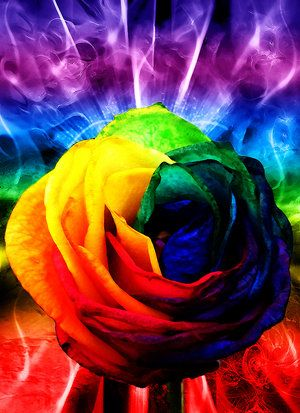
 Colours have their own language , such as flowers or gestures .They can transmit us a feeling, a message. However the interpretation of colours is not the same in all cultures and that's what makes it interessant . Even if we tend to associate for example red with love and green with nature, these interpretations can differ according to the culture . But why are colors so important? Well, there is an spanish idiom that says “ todo entra por los ojos” which means that what we see, the visuals we see , it's the most important. It may sound superficial but we all know that is kind of true.  For example in the Western culture where black is associated mostly with death, it will be very odd to see a bride dressed in it. And now, without further ado,  let´s do a review of the colors.


RED


To start let's pick red, my favourite colour.  This color its eye- catching, that's why in countries around the world they used it for the traffic signs and to signify stop on traffic lights It´s a color commonly related to passion and love in the Western culture. It's the most color used by women for their lipstick and nailpolish.


Also in  China this colour represents good luck and prosperity and people traditionally wear it for  big celebrations such as New Year.  This color is even used for the bride's dress, yes that seems strange for other cultures but in India it's the same case. You can identify the brides because of the red henna on their hand . 


But in South Africa it´s linked with mourning, the red in this country's flag represents all the blood caused by the violence to gain their independence.


ORANGE


Orange is another remarkable color, as a matter of a fact life rats, life jackets and buoys are orange. Even the so-called “ balck boxes” from the aircrafts are orange because it makes it easier to see them in the rubble.


 It´s a color considered wild and fun in most of the cultures. Actually most of the clown wigs are of this color. Further is  the color from the royal family in Netherlands, and there is a tradition in this country called the “ Oranjegekte” ( orange craze) that occurs during major sporting events or the King's birthday  and where people wear and decorate streets, their cars, their homes in  orange support their country. In Japanese and China this color represents love ,courage and happiness. In Southeast Asia buddhist monks from the Theravada tradition wear saffron-colored robes and it's considered a sacred color because of this. In fact the saffron is considered in India the saffron is considered to be lucky and sacred.


However in Egypt orange is the color of mourning , due to the fact that in Ancient Egypt they used a yellow-orange dye made from realgar in their tomb paintings.



YELLOW


The brightest color, the color of the sun and sunflowers. It´s other eye catching color , and the combination of this one with black is easy to see at long distances. That's why taxis and school buses are painted with yellow and black. Nevertheless this color has very different meanings around the world.


Because of the similarity between yellow and gold, in Africa it is used by  wealthy people. As well in Polynesia it's a sacred color, in local languages the word to design this color is the same used to the curcuma plant. In their culture this plant is thought to be the food of the gods.Besides, in India where like I´ve mentioned they painted the tombs in a yellow-orange hue,  this color is associated with mourning.


In China yellow has historical and cultural importance. The first Emperor was called “ the Yellow Emperor”. The “ yellow robe” was  the one the used by the Emperor. In addition notable visitors in China were honored with a yellow carpet. Nowadays is associated with pornography . They use the term  “ yellow picture” or “ yellow film ” to name pornographic  films, websites or images.



GREEN


The color of nature that surrounds us. It is related with the environment and in many asian cultures it´s bonded with eternal life and prosperity.


Ireland is nicknamed “ The Emerald Isle” due to the green countryside as a consequence of constant rain. Green is also related to leprechauns and fantastic beings such as fairies.  As well it´ s associated with greediness  and jealousy. When we say someone´s is “ green-eyed” when he is jealous and envious. The absinthe , a popular drink in “ La Belle Époque” , was called “ the green fairy” because of the strong percentage of alcohol that was on it and the cheap price which made it the doom for a lot of people .



BLUE


Blue is the color of both sky and sea . It's considered worldwide  a color of calm and security, that's why many banks choose to pick it for their logo. It's also the color of the United Nations flag.In fact in Greece there was a custom to paint all the doors and windows frames to prevent the evil spirits from coming in. The “ Nazar eye” also called the evil eye is a blue glass bead worn as a protective talisman against jealousy and evil.


While in the Western culture blue is often associated with masculinity, in China it is with femininity. Blue has strong meaning in different religions. In Hinduism it´is Krishna's  skin color, a goddess who embodied happiness and  love . In Judaism blue is the shade of  for holiness and divinity, just as in Catholicism where the “ Virgin Mary” is commonly  portrayed on a blue robe. 


PURPLE


This color is frequently tied to spirituality, faith, wealth and royalty. It's linked to richness because of the difficulty to produce this pigment.  Purple dye was extracted from sea nails and they needed for just one gram of this color nine thousands small mollusks. In fact it was called Tyrian purple because Tyre, a Phoenician city, was the only place to produce this hue. That's why purple clothing was exclusive for the royalty and wealthy people. It´s a color also related to womanhood and femininity.


In some European countries such as the U.K and Italy , also in Brazil and India , purple is considered a color of mourning. In Brazil it's  said to be unlucky wearing   purple  when it's not a funeral or an event linked to it. In Catholic tradition this color has the same meaning. As a matter of a fact, in Peru each year we celebrate “ El señor de los milagros” ( The Lord of  miracles) in honor of Jesus. In processions people wear purple robes , that is the traditional habits of the Nazarenas, devout Peruvians who took care of the Lord of miracle´s chapel. 



PINK


This shade is bonded to femininity, love, tenderness and romance. It´s a calming color . In the  1980´s after the  results of the scientist Alexander Schauss who found out the calming effects of this color, prison wardens started to paint holding cells in pink.  


A fun fact of this color is that in China it was an unrecognized color. But after the increasing Western color they named it “ foreign color”. Nowadays pink is a representative color of the battle against breast cancer.


WHITE


White is the reflection of all light waves in the visible spectrum . It's attached to purity, peace, goodness. In Western culture is the typical color of wedding dresses. This tradition goes back to the 19th century when Queen Victoria chose to wear a white lace gown instead of the coronation robes of royal tradition. Although some said it came of Roman tradition where brides wore white tunics to show their chastity . 


It´s a calming and peaceful color, that's why hospitals choose this shade for their rooms. Furthermore it is known that the white pigeon with an olive branch in the beak is a worldwide symbol of peace.


However in some cultures white is the color of mourning , in China it´s used in funeral clothing. 


BLACK


Black it's not a color ,technically is the absence of all visible light. It's related to evil, death, night time, elegance. In the Western culture is the predominant colors in funerals and for mourning. It´s a color related with elegance that's why most of the tuxedos are of this color and why we talk about “ balck-tie affairs” referring to formal ones.  In Japan it denotes mystery and it's used for calligraphy.  In many religions it is believed that before  the world was all darkness .The Devil is referred as the “ prince of darkness”. 


On the other hand in Egypt black is associated with life due to the rich black soil that flooded the Nile. In India balck is also a color of protection against evil, sometimes a black dot is painted under a person's chin or behind their ears for protection.
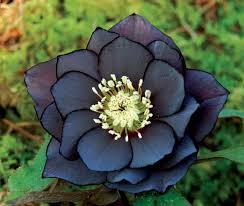


Colors have different meanings depending on the cultures. That's the beauty of diversity around the world, where you can always learn and discover new things. It's crazy how the same thing, in this case a color, can have so many differents interpretations worldwide. I hope this post will help you to understand more the beliefs and traditions of different civilizations and you learned new things.


PD: All the pictures were taken by myself, only the blue and black flowers picture´s are from the web


Tuesday, 17 November 2020

The history of electronic music

Electronic music, what is it ? The common thought is that it is the “ party music” you hear at the clubs or for the people who don't like it, it's just noise. My aim with this post is not changing your opinion if you don't like this music gene, which is my favourite, but instead I want to show you the large history behind it. And that is everywhere , at commercials, movies, stores, even pop music or hip hop. The history  goes up to the beginning of the 20th century, yes that´s crazy.


The dictionary definition for electronic music is : Electronic music is music that employs electronic musical instruments, digital instruments and circuitry-based music technology. It´s a very vast definition but basically electronic music borned as a new way of making music, using the new technology that was being developed and finding new sounds to use.


The genesis of the music recording was thanks to Thomas Edison and Emile Berliner with the invention of the phonograph . This revolutionary invention was the proof music could be captured and be reproduced in the future.


 Electronic instruments:


There were many “ proto” instruments of electronic ones. For instance the most known are the telharmonium and the theremin.

Thaddeus Cahill, a lawyer, developed the telharmonium in 1867, and this one is considered the first electronic instrument . It was born like an idea of Thaddeus of making money with the creation of the telephone.  This electric organ basically used rotating electromagnetic generators (and thus was a predecessor of the Hammond organ) to produce electric impulses that were converted into sound by telephone receivers.   The telharmonium made use of the telephone networks and transmitted music to restaurants, houses , hotels. The subscriber called the central, asked for the telharmonium and chose the song they wanted to hear. However this creation led to various struggles because it interfered with  the telephone service in the area.

The theremin was created in the early 1930s by the russian Leon Theremin, literally you can play this instrument without touching it , i t works with “electromagnetic fields that create sounds at different pitches when the musician moves her hands around the theremin.”


Early history:


Another influence was dadaism who was not only present is visual art but had a crossover with music . Dadaism wanted to break the esthetic canons of art, to put the chaos over the order, basically it wanted to break with all it was established.


The emancipation of noise also played an important role. What is music? What can be music? These questions led to reconsider the idea of music and what sounds can compose it .


Musique concrète (Paris): 


This movement, more precisely it was a study carried by Pierre Schaeefer originary  from Strasbourg. He wanted to experiment and find new ways of sampling sounds and put them together.  He founded the “ Groupe de recherche de musique concrète”(Concrete music research group) in the French Radio Institution  in 1951. Also he collaborated with the percussionist composer on many different musical compositions.They were making music with existing sounds such as train noise for example. Pierre Shaefer invented sampling, which is the reuse of an existing  sound in a new record, this is very popular in all music genres like hip hop and of course electronic music.


Elektronische Musik( Cologne,Germany) :


All the way around to Cologne in Germany a new movement of electronic music is borned, and it's one with a different perspective. Elektronische Musik was started by a team who wasn´t really integrated by musicologists but by  speech researchers, radar technicians, etc .They saw science as the future and how they could integrate technology in music. Germans were very intrigued and impressed with the american invention the vocoder , which was a speech analysis machine that you could also use to alter speech and to analyze the components . Serialism was the base of this pursuit to electronic music creation , they wanted pure and objective music.  Some major representatives are Stockhausen, Werner Meyer-Eppler, Hebert Eimert .


Music for Magnetic Tape (USA):


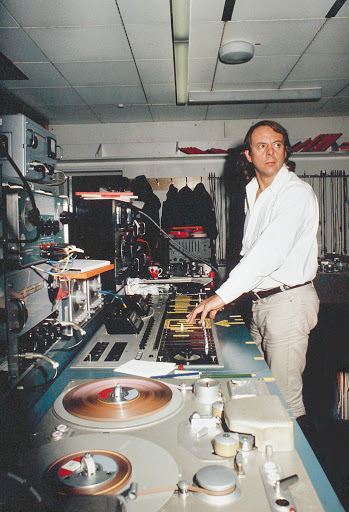
At the end of the Second World War USA was intrigued by the advanced  audio technology used by germans, so they decided to send militaries to find  more about it. It was John T. Mullin who was sent to research them. What the germans used to  transmit Hitler speeches were tape records, who at the time were unknown and a secret for other countries. These techniques enable composer to record any sound whatever on tape and then manipulate the tape to achieve desired effects. Sounds can be superimposed upon each other ( mixed) , altered in timbre by means of filters , or reverberated.


 From The 70's : 


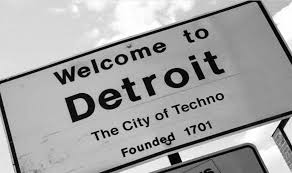
In those years a lot of artists mostly in Europe started to exploit the new sounds that we´re able to do with synthesizers. Undoubtedly Kraftwerk, a german electro-pop band, is one of the electronic music pillars . They liked to experiment a lot with their music, with synthesizers. At the beginning their tracks were more melodic but with albums like “ Man Machine” we can see their approach with techno. This band was integrated  by  Florian Schneider, Ralf Hutter,Wolfgang Flur and Karl Bartos , and until today is a big influence in the music industry.  It's unavoidable to talk about disco music , the name comes from “ discotheque” in french which means library of phonograph records. At this time was  when the terms “dj” or “ disc jockey” began to be used.  It´s a mix of funk, salsa,soul and pop.  Disco was very popular in the gay , african american and hispanic community. This new genre of music reached his edge at the middle of the 70´s ,“ Love Train” was the first disco song to reach the first place at the Billboard Hot 100. This era was characterized by colorful and shining clothes, dancing at the clubs dancefloors, free love and well drugs. Disco leads to the creation of two major genres , house and techno. The place of birth of techno is Detroit, where young people sick and tired of economic problems and the difficulties went to abandoned factories and started doing music, those parties  were crazy. The pioneers of techno are Juan Atkins, Derrick May and Kevin Sauderson. House was borned in Chicago and it comes from disco music. The club “ The Warehouse” where Frankie Knuckles was the dj resident , is where house music originated. This music genre was characterized by the combination of sounds, remixes, adding drums and synths. House spread all over the world and also lead to new subgenres such as deep house or acid house.


Nowadays:


Nowadays there are a lot of electronic music genres that it is impossible to name them all but the famous ones are: house,minimal,techno,drum and bass,progressive, acid,experimental,edm. Thanks to computer programs like Ableton, anyone is capable of creating their own tracks.


Thanks to the advance of technology and the growing electronic music scene all over the world we can enjoy all kinds of music and it keeps developing it.  Raves and festivals take place all over the world ( even if sadly  due to the actual crisis we cannot enjoy them) 


Personally I love Soundcloud where I can find tracks  and sets from a lot of different artists, and  a big part of them are independent ones or not streaming ones  . Also if you like listening to sets of this music a good alternative is the youtube channel “ Cercle”. The videos are stunning, the views, the crowds, the artists. And if you are into lo-fi music , minimal  and kind of experimental music you should check the channel EELF. It's awesome because they take videos from the 70's,80`s,90`s from movies, parties, schools, movies everything and they put them with the music. And the best of all is they premiere videos almost everyday.


Electronic music is much more than raves , and it's not only about partying or “ taking drugs”. Those are big misconceptions. Electronic music is freedom to express you through music, it's love and appreciation for artist, it´s music at his pure state, it's getting out of this world, it's dancing all night and listing track of time because you´re having the best time of your life  , it's PLUR ( Peace, Love, Unity and Respect).


Tuesday, 8 September 2020

Ashoka and buddhism

History makes us, we are our history. When you learn about world history you understand a lot of things, a new world is opened to you.  We are going to see how one of the most bloodthirsty  Mauryans emperors from India converted himself into a loyal follower of Buddhism and thanks to it he conquered through peace and respect. 


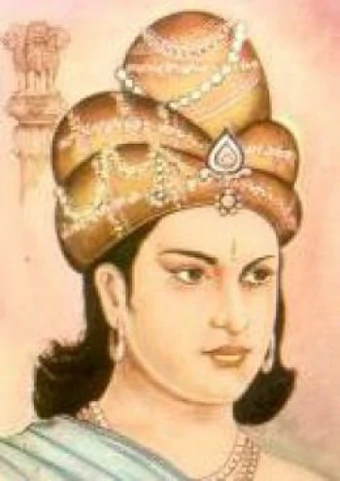
Ashoka was born in 304 b.c in India , his grandfather Chandragupta who built the Mauryan empire with the help of his tutor and advisor Chanakya. His successor was Bindusara , Ashoka´s father. Bindusara had a lot of children and Ashoka wasn´t one of his favourites, he disliked him because of his appearance and his strange skin due to a disease. Normally the next emperor was going to be his brother Sushima but Ashoka took his place after his father's death and burned him alive.For instance, to succeed to the throne he killed 99 of his brothers , sparing only one.  He ruled almost all Indian subcontinent from 268 B.C.E  to  234 B.C.E through a non violence edict. But he wasn't always the  pacifist emperator we know nowadays, as you could notice. Initially he was very cruel and took part in massive killings according to the Ashokavadana (sanskrit text that narrates  Ashoka's life and  reign ). For example is told he was very interested in tortures techniques and even built the “ Ashoka hell” a prison that seemed very elegant and beautiful from the exterior but inside was a torture chamber.He converted to Buddhism after witnessing  massive deaths (100,000 people), he deported around of 150,000 and leaving thousands die of famine and diseases. in their conquest of the Kalinga´s state.  It's not very clear how he got in touch with buddhism, it's possible that he had already heard about it before Kalinga or maybe after his war he learnt more about Buddha´s  learnings and combined them with other religions beliefs that in that time in India embraced peace, respect and spirituality.   At this time buddhism was a minor philosophical religion and thanks to him the buddhism was expanded through India and the Occident. 


He implemented a tolerance and respect policy,he helped the diffusion of buddhism teachings. He reigned with “ dharma” wich in hinduism means “ the purpose of your life” but in his context was also understood as  to be the energetic practice of the sociomoral virtues of honesty, truthfulness, compassion, mercifulness, benevolence, nonviolence, considerate behaviour toward all. He even  became vegetarian because of the “noninjury to animals” buddhism belief. His aim was to spread “nirvana” which can be translated as “ a non pain state” , and happiness.


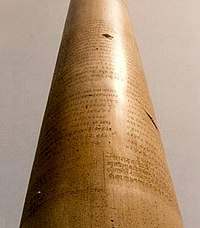
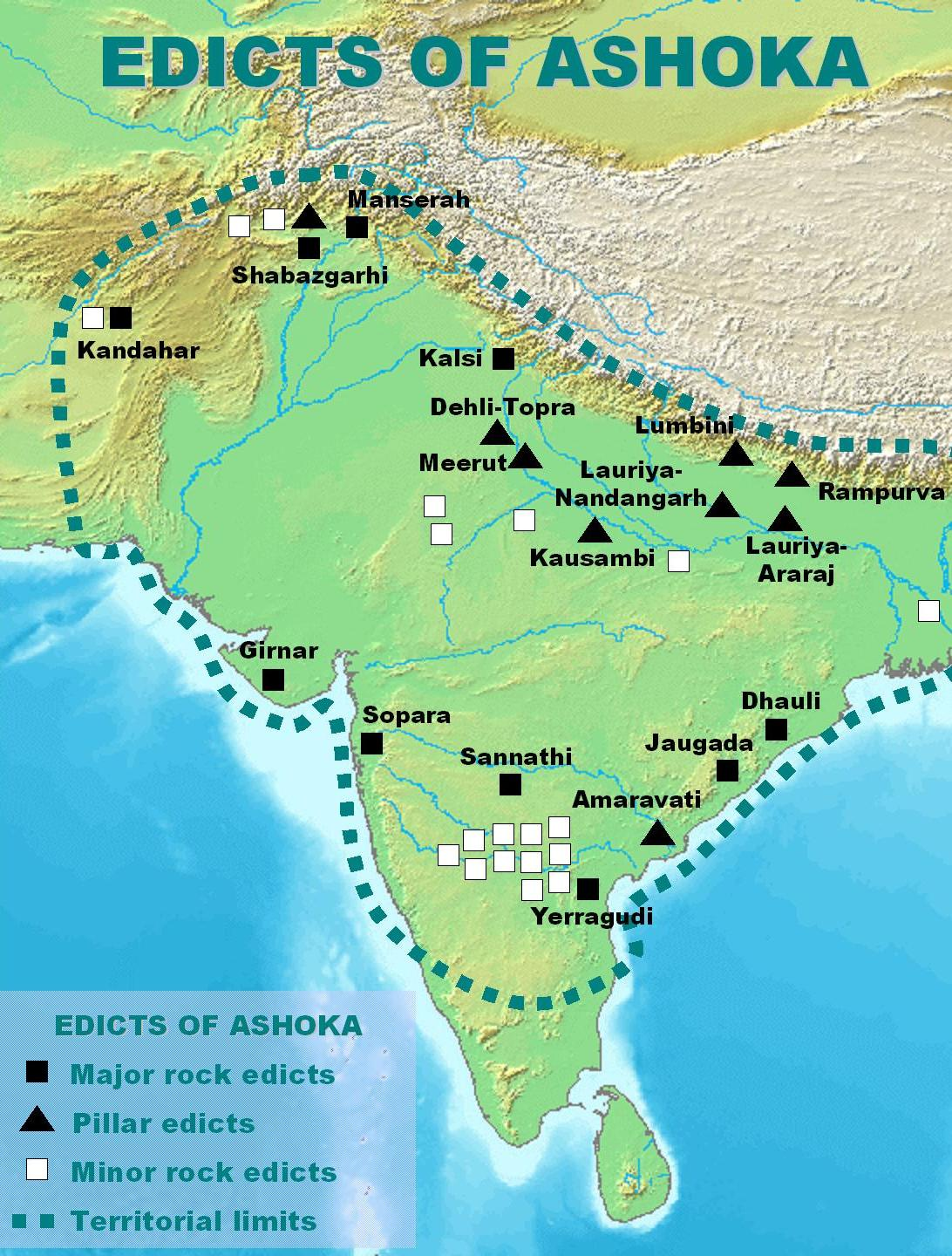
How did he exactly manage to spread buddhism? First he went to numerous pelerinages, learnt more about “ dharma”, sent buddhist  monks on missions all around Indi, Asia and even Europe.Ashoka ordered the constructions of enormous stone pillars ( between 15 and 20 km) and slab where it will be witten dits. These ones showed the emperor a new outlook of life and spread the message of peace, respect and tolerance.They were not carved in Sanskrit—the official state language—but in local dialects, so that the messages could be widely understood. For example, an edict near modern-day Kandahar in Afghanistan, an area that had been under Alexander the Great’s control for a period of time, is written in Greek and Aramaic.


Quoting him :


All men are my children. As for my own children I desire that they may be provided with all the welfare and happiness of this world and of the next, so do I desire for all men as well.


Of all Ashoka's stone works, probably the most famous one is the Lion Capital at Sarnath, who later became the nation's symbol at Indian independence.


 After his conversion he performed social welfare activities such as the construction of medical treatments , he constructed special botanic gardens, roads were built, veterinary establishments were constructed.


Even if probably Ashoka's history is too good to be true and maybe some details are not that reliable( for example he continued to use military forces after his conversion) this emperor is a great example of good values such as tolerance, caring for the common good and how finding internal peace and follow the path of happiness can change us.

Tuesday, 25 August 2020

DOPAMINE

 Nowadays we are exposed to a lot of distractions and addictions. They sell us dopamine through social media, video games, alcohol, drugs, tv shows, fast food. What is dopamine? I think we´ve all heard about this but are not quite sure what it is. Dopamine is a neurotransmitter, basically is the “ feel good” hormone. It is released by our brain when he expects a reward. Our brain anticipates how we will feel after doing the action that gives us dopamine, he anticipates the feeling of reward . For example when we binge watch videos on Instagram or post a photo. When we really enjoy doing something we will repeat, that's logic.  But there is this tiny line between doing something and becoming addicted because it's not easy to realize it.We are used to earn dopamine without doing nothing, with just a click. Indeed, platforms like Snapchat, Twitter, Instagram leverge the same reural circuitry used by slot machines and cocaines to keep us usig them.


What does dopamine to our brain? This hormone  plays a role in  our digestion, blood flow, heart rate, memory and focus,sleep, pain processing, etc. Yes dopamine it's not a bad thing but like everything in life too little or too much dopamine will affect our body and our minds.


We already know what is  dopamine and things like : social medias, sex, fast food, social medias ( I know it looks like dopamine it´s a bad thing but it isn´t. I will give you examples of “ natural” things and good thighs that give us dopamine)


Too much dopamine in your body can play a role in :


 Addiction: when something gives you too much dopamine like is the case of drugs you can become addicted to it. Your brain is used to having this big amount of dopamine  because of the drugs so then it´s more difficult for it to produce it in other ways. Your brain becomes dependent on the drug for the dopamine release. 

Obesity: it´s similar to an addiction, but in this case you are addicted to food. Such as the drug addiction who activates the “ dopamine reward system”, junk food does the same.


Although  these high levels of dopamine that are caused by drugs or junk food for example can also cause you a dopamine deficiency because your body is now used to create this hormone thanks to those things. So the “natural cycle of dopamine” is affected


Too little dopamine:


Parkinson: In Parkinson’s disease, there is a loss of the nerve cells in a specific part of the brain and loss of dopamine in the same area.


Depression: Some of the depression symptoms are due to a high level of dopamine in some brain areas , this causes hallucinations and delusions BUT also a lack of it in other parts of the brain can cause other symptoms such as lack of motivation and desire.


How to produce natural dopamine?


. Eat food rich in tyrosine : In order to make dopamine, your body needs tyrosine which can be found in almonds, bananas, avocados, eggs, beans, fish, and chicken.


. Working Out: Yes I know a lot of us are very lazy but we know all the incredible benefits that working out gives us. Good health, longer life, it puts us in a better mood . Working out helps to the increasing of brain cells production and dopamine


. Reading : When you acquire the pleasure of reading a whole new world is open to you. Reading disconnects us , even for a little time, from the real world. I think that soon I will post book recommendations.


. SLEEPING : A lot of us don't give too much importance to our sleep schedule, we are so busy with our lives, our problems, our tv shows. But getting enough sleep is very important in order to have a good brain function, a good mood and even a longer life.


.Meditating :Meditation is a practice that has thousands of years and helps us to know ouservelves, increase motivation and focus. I´ve been meditating a lot , for the last 2 or 3 months and I can tell you that I feel such a difference. I feel calmer, happier. I have a more positive mind.


Dopamine cell

Wednesday, 15 July 2020

Freemasonry and Illuminatis

I think that we´ve all heard about the famous conspiracy theories about the Illuminati and Freemasonry, but we are not sure what's the difference. I'm going to tell you first what are the origins of these two groups and their history . Then , what are the differences between them .And finally my opinion about them.

 The Freemasonry is the world's largest worldwide secret society. The questions of when, how, why and where Freemasonry originated are still the subject of intense speculation.There is a legend where they said that the first mason mentioned in history is Hiram Abif the architect of the Temple of Solomon in Jerusalem . Other theories say that the Freemasonry existed a long time ago, that characters from the Bible like Noe, the architects mentioned or Moíses were masons.

 They attribute to the masons the construction of the pyramids, that they were part of the humanists of the Renaissance .The general hypothesis is that they descend directly or indirectly from the organisation of operative stonemasons who built the great cathedrals and castles of the middle ages.

 There are 3 degrees in Freemasonry Apprentice, Journeyman or fellow (now called Fellowcraft), and Master Mason. The first Mason Lodge was built in England, in 1717 . It was the Grand Lodge and is located in England.The Freemasonry is divides in two currents : Regular Anglo-Saxon Freemasonry ( British Isles, United States,a big part of Europe included Spain, the american continent) and Regular Continental Freemasonry ( France,Francophone Africa,and part of Europe).
The regular Anglo-Saxon Freemasonry is the one with the more “ strict rules”, for example it's prohibited to discuss about politics and religion, women are not allowed ans you must belief in a Supreme Being.

 The rules accepted by the two orders are : That it must have a legitimacy of origin; that is, that its constitution has been sponsored by some other regular Masonic organization. In this sense, the initial regularity is generally considered to emanate from the ancient Grand Lodge of London and Westminster. Respect for the values and fundamental principles established in the founding documents, in particular the so-called Anderson Constitutions, published in 1723.
We could say that each Grand Lodge is independent, even if they respect some basic rules they can implement their own.
Usually there is a Grand Lodge that supervises the lodges in their state or country but there isn't a Worldwide Lodge that supervises everyone. Finally, lodges that don't include the criteria of either of the two main currents are usually called wild, although they prefer to refer to themselves as under the celestial vault.

 The oppositors of the Freemasonry all along the History were the Catholic church, the Islam religion, dictatorships like the fascim, the nazis,etc. That's because they saw Freemasonry as a dangerous society related to esotericism and that wanted the destruction of religion, the family and the State.

 Currently being part of Freemasonry is easier, or not that hard to enter. If you want to be a Mason, you can petition a local lodge for membership. You'll need to demonstrate good character and belief in some sort of Supreme Being. Then the members of the Lodge will vote to see if they accept you. But almost all the lodges are exclusives for men.
The etymology of “ Illuminati” refers to the illuminated mens, the ones who know the truth, that are enlighted with this wisdom . Various groups claimed to be illuminatis, there is not only a group. There are the Alumbrados( 16th century) in Spain,the Rosicrucians that remained secret the first 100 years of their creation. However on this post we are going to focus on the group from Bavaria, the “ famous” ones.


The Secret Society of the illuminatis started with 5 men on may 1 , 1776, yes in their first meeting there were 5 men signing a pact in the woods. It all started with the bavarian professor Adam Weishaupt. His family was jewish converted to christianism and he was very devoted. Despite this he thought that the power from the monarchy and the church didn't let the men be free. At this time the Freemasonry was expanding all over Europe but Weishpaut after joining didn´t agree with their beliefs so he decided to found his own secret society.

 The aim of Adam Weishaupt was to replace christianism by a religion based on reason . The members of this secret society called themselves “Perfectibilists.” This society was divided in 13 degrees of initiation divides in 3 classes, the first one was the for beginners, they were in the range of novices or minervals, then the second one “ freemasons'' ( they took the idea of the hierarchy from the freemasonry society) and the third one is the mystery one where they had the ranges from priest, prince, magnus and king.
At the beginning the members could only be Weishaupt students ( in fact it's said that the first members were young teenagers, such as 14 years old) but over the years this society grew up considerably , they included politicians, nobles,lawyers, etc.

Famous people from Bavaria were part of it and even is speculated that Goethe was also an perfectibilists .They had their own nicknames if we can call it like that, Weishaupt was Spartacus for example and the one of the co-founder Adolph von Knigge was Philon . Also when they communicated by letters they used a cipher language.
Their beliefs and plans were: creating a female branch from their society, defense of atheism and suicide, abortion, the creation of a New World Order and they even create invisible ink. Sadly this order was banned by an edict in 1785 and in 1787 another edict imposed the death penalty to any member of this group. Wieshpaut was banned and moved to Gotha in Saxony where he taught philosophy at the university of Göttingen. Normally this is where this secret society ended, but there are a lot of speculations that they continued. They related them to the French Revolution, which is false. Also they inspired many fictional books such as Dan Brown’s Angels & Demons and Foucault’s Pendulum by Italian novelist Umberto Eco.
The Minerva owl was the Illuminati´s symbol, a symbol of power and wisdom.

 Now we are going to see what relates these two societies, what explains their similarities. First of all
the founder of the Illuminatis was part of the Freemasonry, and one year later after joining this group he decided to create this other one. Because the Illuminati recruited many members in Europe through Freemason lodges, the two groups are often confused for each other. The degrees from the Illuminatis were inspired by the ones from Freemasonry, indeed Weishaupt and Adolph von Knigge were both part of the Freemasonry.

The difference is that Freemasonry, even if it is classified like a secret society, is not a secret at all. The members don't keep it a secret that they are part of it, the illuminatis did it instead.


 Nowadays the Illuminatis are often associated with Beyoncé,Jay Z, a new world order or even reptilians. All these conspiracy theories are not proved , but the mystery of these secret societies will always blow our imaginations. And I think Freemasonry is a very interesting society, it is more likeable that they control us instead of Illuminatis.

Friday, 10 July 2020

Le désir


Le désir est par définition insatiable, il est la marque de notre manque ontologique. Car l´homme au contraire de l´animal n´est pas parfait , comme le dit le mythe de Prométhée , on est nu et sans chaussures. Le désir est paradoxale puisque il veut, au sens de désirer , et en même temps ne peut pas être satisfait. Il marque l'infinité de l´homme , puisque nos désirs sont illimités, mais aussi soulignent notre finitude puisque, c´est l´indice qu´on naît avec cette manque ontologique. Ce désir n'a pas de bornes, de limites. Puisque á différence du besoin qui peut être satisfait celui ci ne le sera jamais, on voudra toujour plus. Une illustration de cela est l´exemple donné par  Socrates, celui des tonneaux percé des Danaïdes qu'il compare au lieu de l'âme qui est le siège des passions, qui est insatiable, qui ne pourra jamais être rempli. Tout à fait comme les tonneaux. On est conscient de nos désir mais pas sachants, on ne sait pas d'où il vient . Puisque la passion s'oppose á la raison , les passions sont tout ce que nous empêche de penser . Par exemple dans le cas d'un jaloux, il part d'une certitude, que son amoureux le trompe. Au lieu de partir d'une hypothèse, il part d'une conclusion. Mais en fait notre condition humaine est d'être désirant , avoir des désires est d'être vivant. Oui, c´est notre manque ontologique mais c´est ce qui nous fait humains.


Le Désir en philosophie

Sunday, 21 June 2020

La préciosité


The word "precious" was borrowed from the Latin adjective: "pretosius": which has value.The precious movement was born in France in the 17th century, and culminated particularly between 1650 and 1660. It is located during the regency after the government of Louis XIII. It was born as a challenge to the coarseness of the court of Henry IV where the courtesans were rude, liked salacious jokes  , the unsophisticated language . 

This movement is present throughout Europe, each country develops its current: in England there is euphemism , in Spain gongorism (style research, taste of images) in Italy Marinism ( hyperbola, antitheses, metaphors) All these movements seek a refined and elegant style  . This movement trespasses the bounds of literature and is converted into a way of life.  The main aspects of this movement are: the taste for distinction (the importance of sustained language (periphrase and metaphor, culture,elegance), the courteous love in which the woman is an idealized and inaccessible being,the art of conversation and even the questioning of marriage. Also there is the creation of neologisms like , congratulate, anonymous . 

They used  periphrases such as "the mirrors of the soul" to designate the eyes, a simple armchair becomes a «convenience of conversation» They oppose the too realistic term or evoke «vulgar» realities: corpse, vomit, sweep, The broom becomes «the instrument of cleanliness». The precious always seek a more elegant, refined life and distinguish themselves from the common.  


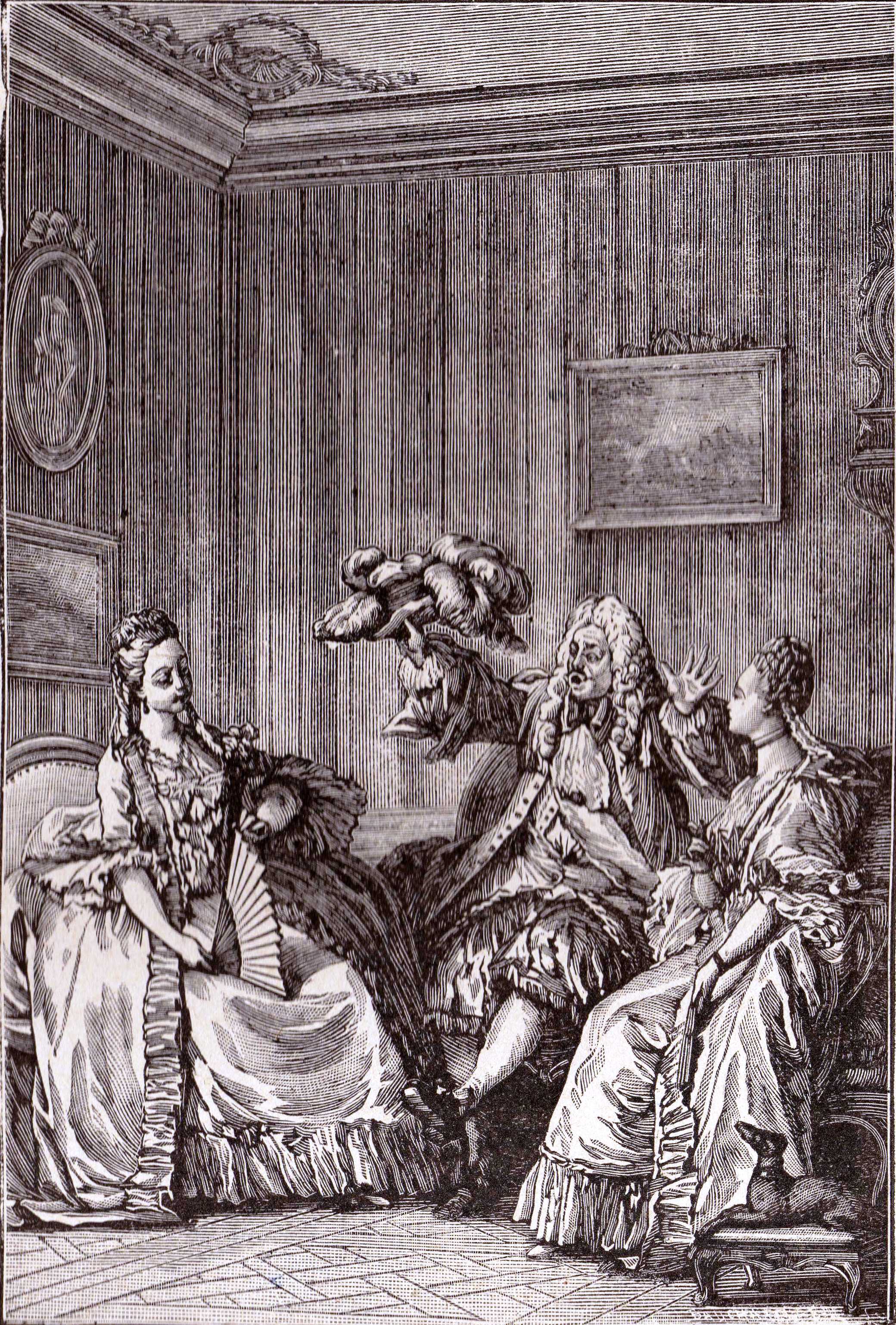
What characterizes this movement in France is the development of precious salons, of a cultivated company that meets in its salons most in the district of Marais . The precious ones, as we call them the women who run these salons or also called “Hotels”. The mistresses of the living rooms often receive their guests in a room, sitting on the bed. The courtesans thus form a circle around the mistress of the house. These salons are places of entertainment (  champagne, board games, etc ) but also a cultural crossroads ( debates, poetry, readings of works ,etc). The first big and famous salon in Paris was that of the Italian Marquise of Rambouillet who in her “Blue Room” welcomes aristocrats like Mme de Lafayette , Mme de Sévigné or the poet Voiture. Another very important salon was that of Madame de Scudéry, who every Saturday brought together bourgeois . 


The literary genres privilege by the precious: idealistic novel (pastoral novel that stage shepherds and shepherds who have a chaste love or heroic novel), poetry, eloquent letter or badine. The great works of this movement are, l Astrée d Honoré d Urfe ( pastoral novel) Clélie and Le Grand Cyrus ( heroic novel) by Mme de Scudéry or Correspondances de Madame de Sévigné.

Nevertheless this movement was contested by great figures of the time such as Molière, in the Précieuses ridicules ( 1659) where he criticized the extravagance of language, clothing and manners. This movement is very influential , it has an influence on the loving mores that become more refined , the language also on its part becomes more refined one could say that it anticipates the classical language but also it has brought a simplification of the French language, even if it seems contradictory (author, reply, aisne), and we use periphrases created in this era as for example: to have spirit, to be confused with someone and the place of the woman in the intellectual life, they are rather interested in novels and poetry, they judge and write literary works.


Les Précieuses ridicules — Wikipédia
Les précieuses ridicules of Molière


What is art?

  I once saw in Valencia a graffiti that said “ Exhibit art directly on the streets. It's a way to break with the established roles.Who ...